The Greek Ace
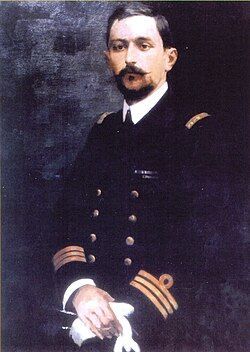
Most people with general knowledge can name famous aviators from the second world war, but what about those who went before them, what about the pioneers of military flight, the first world war aces?
The Red baron, Albert Ball maybe? Billy Bishop? George Guyenmer? But when you look into the lists of pilots who achieved the notoriety of an ace, you will see they come from across the globe, however there is only one Greek person, Aristeidis Maraitinis
Greece did not join the First world war until 1917, but Aristeidis had been in the Hellenic Navy since 1910 as an ensign and had volunteered for the brand new air arm of the force a few years later.
It could even be quite easily argued he was part of the first ever aerial naval military operation when on 5th February 1913, as an observer, he and his pilot conducted reconnaissance on an Ottoman naval base and also dropped bombs on an area in the Dardanelles.
He must have got the flying bug because on the 22nd September 1914 he went solo and achieved his pilots’ certificate, number 1087.
In 1914, he and another Greek pilot, Dimitrios Kamberos took the initiative to form the first ever Greek Naval air force academy – he also co- founded the first Greek aircraft factory as well. They specialised in sea planes at their school as even though Greece itself is a very large land mass, it is full of smaller islands and there was a need for both observation and protection of shipping from the looming Ottoman threat.
After Greece joined the triple entente and declared war on the central powers on 29th June 1917, Aristeidis was working with the British Navy, flying Sopwirth Camels and over a period of fourteen months, was engaged in multiple dogfights and at the end of the war, was credited with nine aerial victories, making him Greece’s only flying ace of World War 1.
It does seem to be the fate of quite a few well known aviators that flying an aircraft they were unfamiliar with was to be the end of their story - I am thinking of one of my personal heroes, Guy Gibson here – but on the 22nd December 1918, Maraitinis was flying from Thessaloniki to Athens, when his aircraft, a Brequet 14 which he had not many flying hours in, went down in bad weather near to the infamous Mount Olympus. Neither the wreckage of the plane nor his remains were ever located, the Ace of the Mediterranean was 27 years old.